The way home
Our flight from Hobart to Melbourne was timetabled at 85 minutes. In 1835 the men who founded Melbourne took weeks to cross the same strait from Tasmania, and Hobart itself had been founded by people who tried Port Phillip first. A last morning on Sullivans Cove, a flight, and an evening in streets named after Hobart men.
Our Qantas flight was timetabled to leave Hobart at 14:15 and reach Melbourne at 15:40, which is 85 minutes. It ran late: FlightAware's record has it leaving the gate at 14:37, taking off at 14:48, landing at 15:50 and reaching the gate at 15:58. That's an hour in the air, most of it spent looking out of the window. Eight days earlier we had crossed the other way on the Spirit of Tasmania, overnight: eleven hours in a chair.
In 1835 the same strait took Melbourne's founders weeks. That's the idea for today: colonial Melbourne was made in Tasmania. The two parties that raced each other to the Yarra that year were, in the Encyclopedia of Melbourne's word, "overstraiters" from Van Diemen's Land, and some of the money behind one of them was Hobart money. The traffic had run the other way first. Hobart was founded in 1804 by people who had tried Port Phillip and given up.
So we started the day where Hobart began, flew the founders' crossing in an afternoon, and spent the evening walking streets named after Hobart men.
1. Sullivans Cove
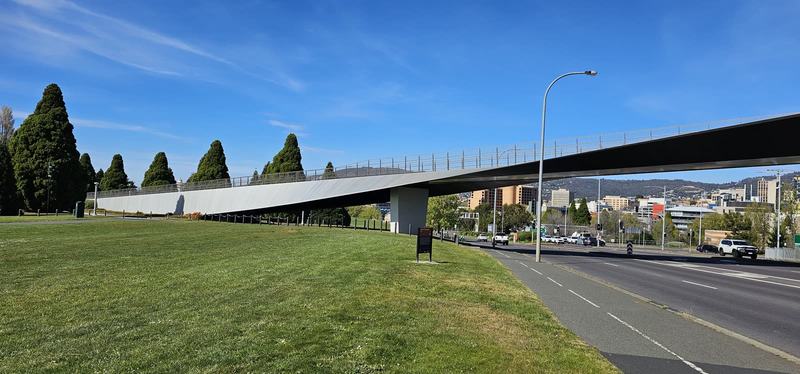
The Bridge of Remembrance, 09:47. It carries walkers and cyclists 200 metres over the Tasman Highway, between the Cenotaph and Soldiers Memorial Avenue on the Queens Domain, and opened in 2019.
The last morning started on a Lime e-ride ($1.65, 9:40 to 9:54). The bridge photo above is timed 09:47, about halfway, so we probably rode out to the Bridge of Remembrance and back. Checkout at YHA Hobart Central was due by 10:00. Two minutes away, opposite Constitution Dock, is the Mawson's Huts Replica Museum: Hobart's Antarctic story, told in The city that faces south. It was $30 for two, and the photos say we were inside from 10:18 to 10:34.
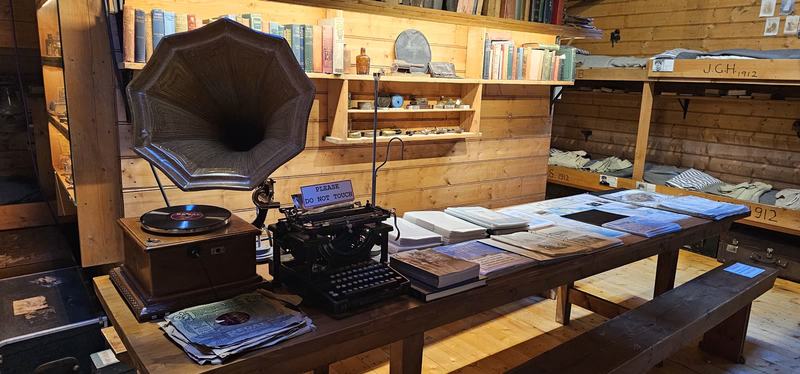
Inside the replica, 10:18: the long table, with a gramophone and a typewriter, and bunks marked with initials and the year behind.
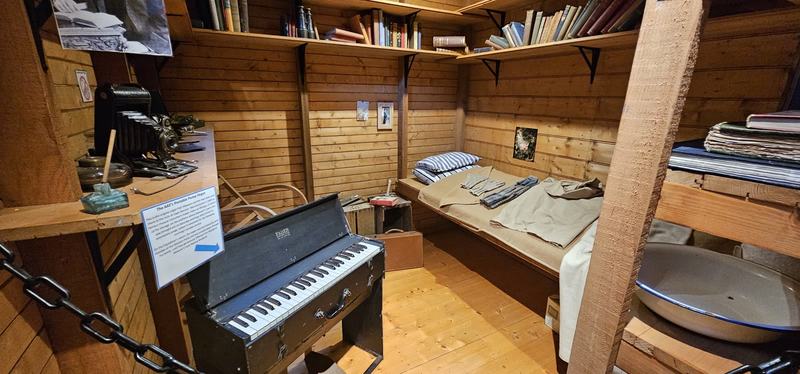
Mawson's room, with the expedition's portable pump organ. Its sign says it was made in 1909 and came out after dinner on Saturday evenings to accompany songs.
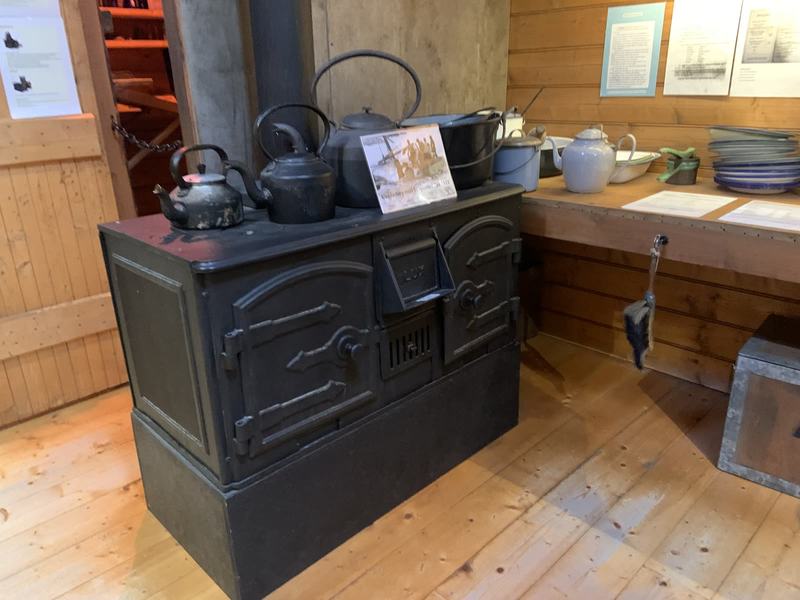
The kitchen corner. At Cape Denison the stove was, in the Australian Antarctic Division's words, the "centrepiece for many a conversation".
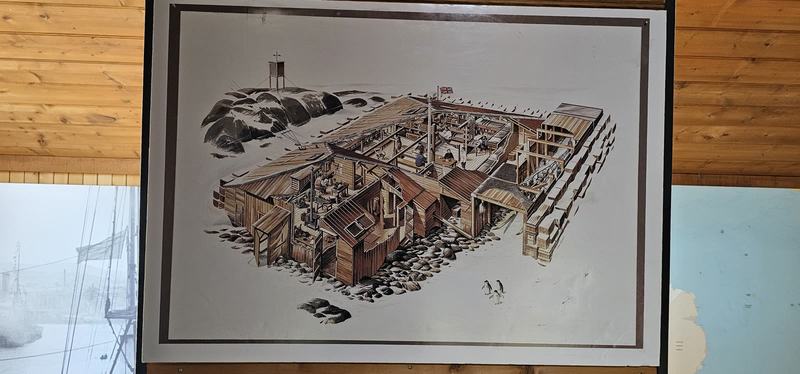
A cutaway drawing of the huts at Cape Denison, on the replica's wall, 10:34.
The dock outside is part of the foreshore of Sullivans Cove, and the cove has an older story of people arriving from somewhere else.
In October 1803 Lieutenant-Colonel David Collins brought more than 450 people, almost 300 of them convicts, to Port Phillip, and made camp at Sullivan Bay, near Sorrento. It didn't work. The State Library of Victoria says the party "had somehow overlooked the mouth of the Yarra River", so they had no fresh water. Early in 1804 Collins moved the settlement to the Derwent, where, says the Australian Dictionary of Biography (ADB), he "chose and named Sullivan Cove" as the site for Hobart Town. He named both places after the same man, John Sullivan, an under-secretary in London.
One of the families who came from Sorrento was the Fawkners. The father was a convict; the son, John Pascoe Fawkner, was ten when they sailed from England. In Hobart, the ADB says, they "lived in a primitive hut at the new settlement on Sullivan's Cove", short of food; during an outbreak of scurvy the boy lost the use of his right leg for months. Remember him.
At 10:56 we were in TMAG, a few minutes' walk away.
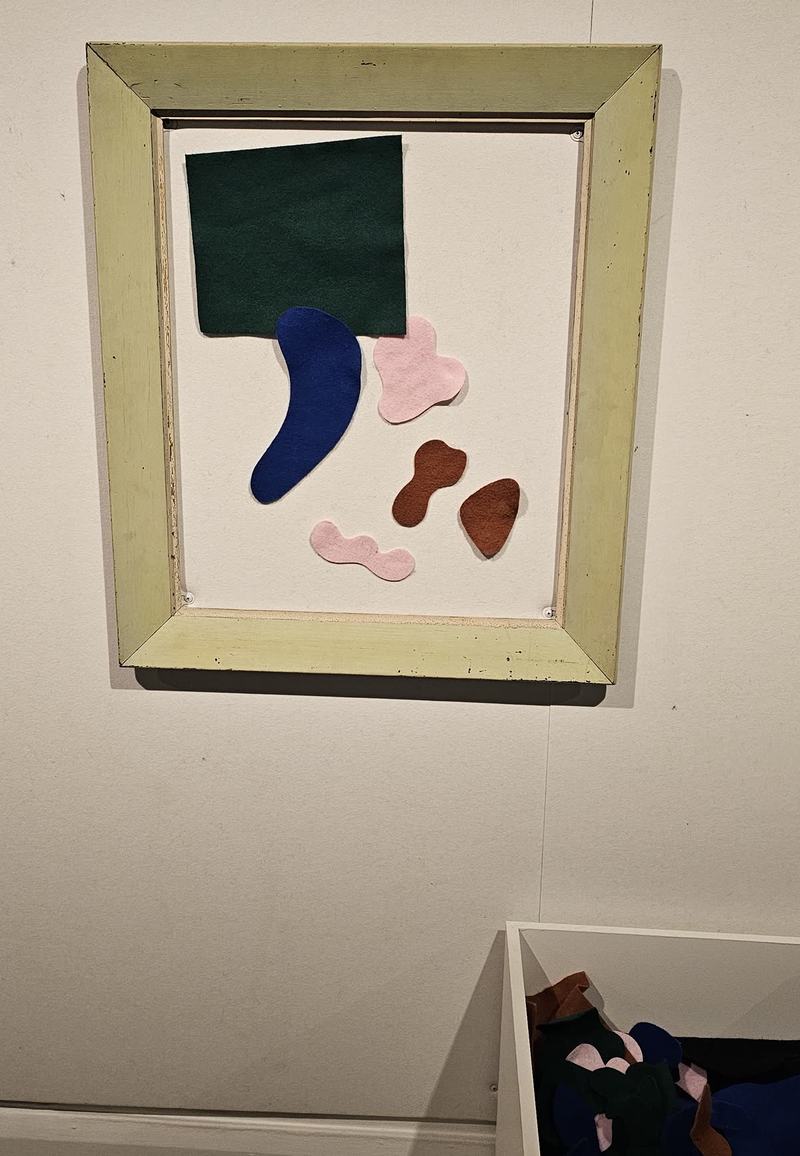
Make your own abstract art: felt shapes and an empty frame in the Becoming Modern show at TMAG, 10:56.
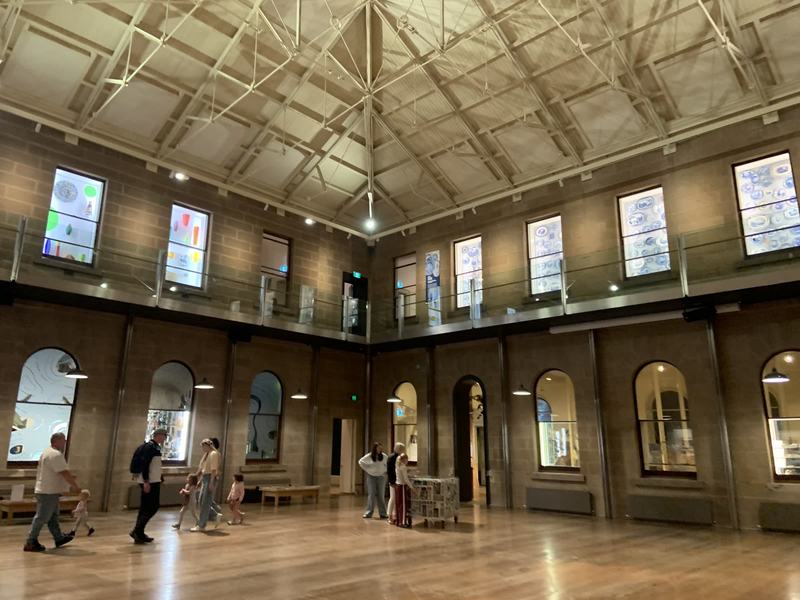
A hall at TMAG, with the old roof trusses overhead and glass and ceramics lit in the windows of the level above.
Before the bus, probably on the way to the stop on Elizabeth Street, we sent three postcards to Taiwan ($10.50).
2. Eighty-five minutes
The SkyBus to the airport cost $45.60 for two. Then coffee and a muffin, and the plane.
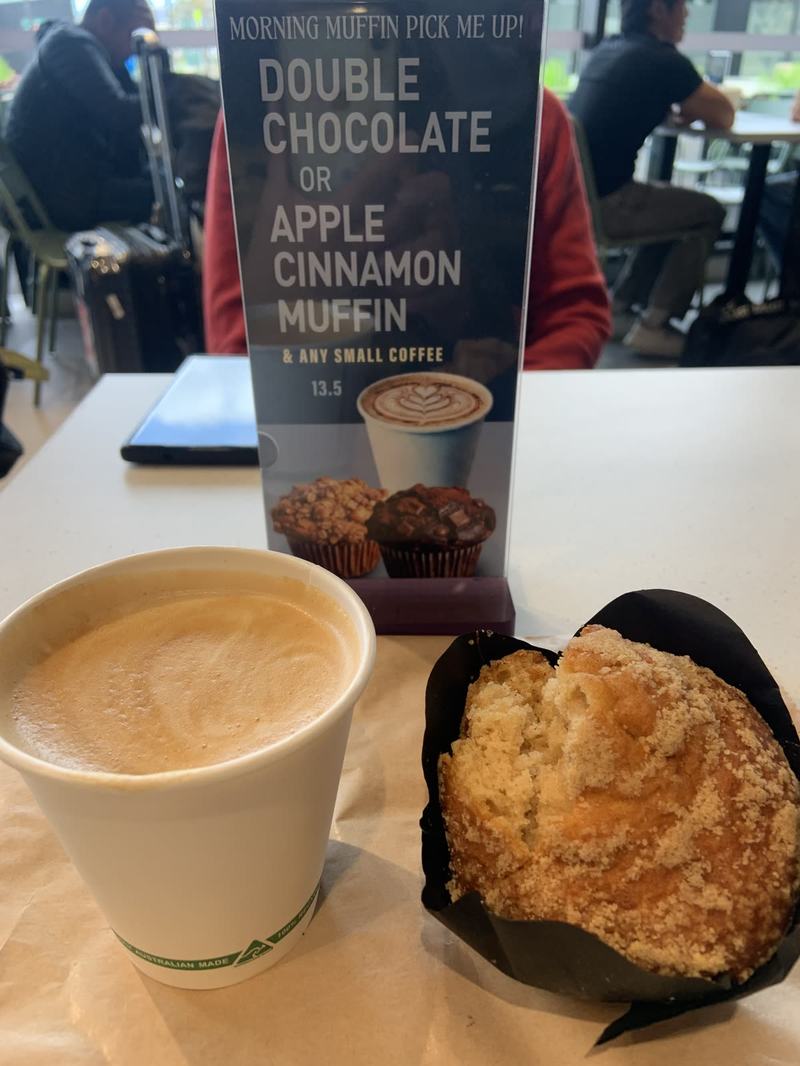
Coffee and a muffin at Hobart Airport, before the flight.
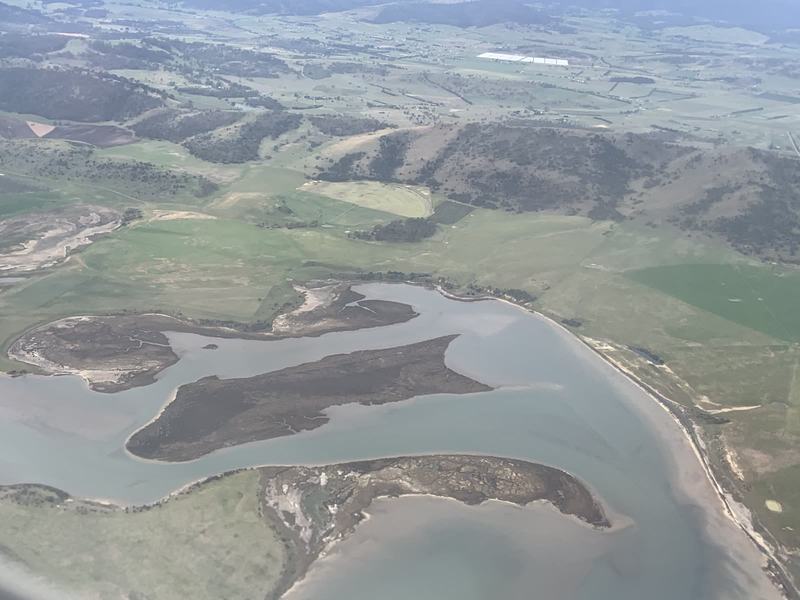
Tasmania from the plane: saltmarsh islands in a tidal inlet, farmland and low hills behind.
Here is how the crossing went in 1835.
John Batman was a grazier from Kingston, under Ben Lomond, near Launceston. Behind him was a syndicate that became the Port Phillip Association, fifteen of Van Diemen's Land's leading colonists, among them the Hobart banker Charles Swanston and the Hobart lawyer Joseph Gellibrand. Batman sailed from Launceston in the Rebecca on 12 May 1835 and entered Port Phillip on the 29th, seventeen days later.
On 6 June he came away with a deed. In return for blankets, tomahawks, knives, scissors, looking glasses, handkerchiefs, flour and shirts, and a yearly "rent or tribute" of the same, it claimed to hand him about 500,000 acres around the future Melbourne; a second deed claimed 100,000 more around Geelong. It carried the marks of eight Kulin elders, and some historians doubt the marks are theirs.
It was not a purchase, and it's worth saying plainly. The State Library points out that for the Kulin, land could not be bought or sold, and that the men Batman dealt with could not have sold their people's land even if they had wanted to. The Wurundjeri may have understood the gifts as tanderrum: a ceremony that gives visitors safe passage and use of the land, not ownership. William Buckley, a convict who had escaped from Collins's camp in 1803 and lived with the Wathaurong ever since, called the deal "another hoax of the white man".
On 26 August 1835 Governor Bourke declared the treaty void and the settlers trespassers. That wasn't done for the Kulin: the Crown's position was that the land was already the Crown's. The settlers stayed anyway. By 1 June 1836 there were 177 of them, with 26,500 sheep, on Kulin country.
Batman, the story goes, had written "this will be the place for a village" on 8 June 1835. Where he actually was is argued over; some historians now think it was on the Maribyrnong, not the Yarra.
Then Fawkner. The boy from the hut on Sullivans Cove was now 42, a Launceston publican who had started the Launceston Advertiser. He bought a schooner, the Enterprize, but his debts kept him ashore. According to the ADB, he went back to port "pleading violent sea sickness" so the rest of the party wouldn't know the real reason. The Enterprize sailed without him on 4 August, looked at Western Port, then came into Port Phillip. Her captain, John Lancey, warped her up the Yarra to the falls, near today's Queens Bridge, and on 30 August tied her up at the foot of the hill where the Customs House now stands. Nearly four weeks, Tasmania to the Yarra.
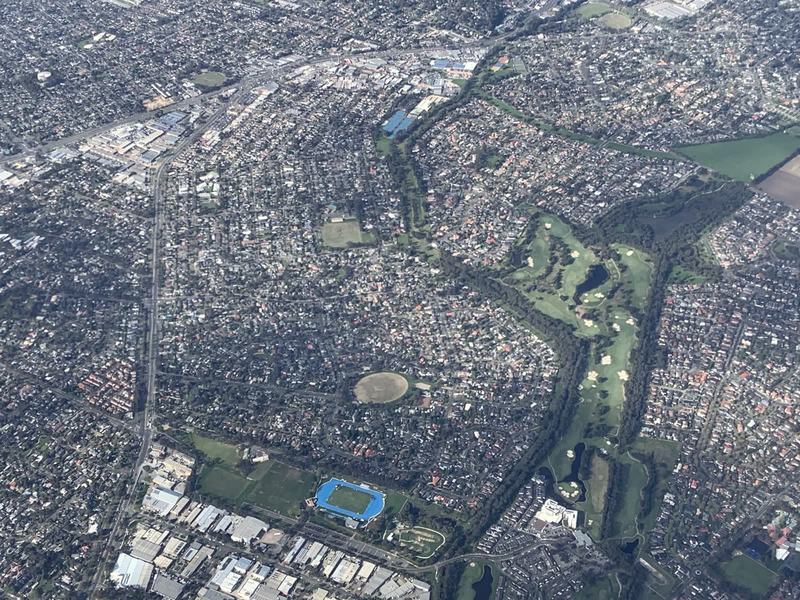
Melbourne's suburbs from the window on the way in: a golf course along a creek, sports ovals and a blue athletics track.
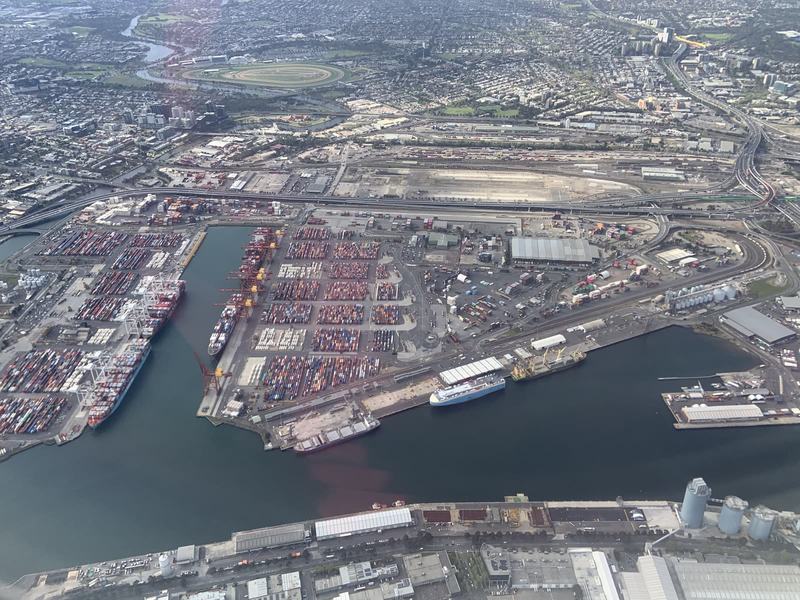
The container docks on the Yarra, with freeways and a racecourse behind. The Enterprize was warped up this river in August 1835, to the falls further upstream.
Fawkner followed on 16 October with the next load: flour, bricks, nails, five horses, two cows, gin and porter. By 7 November his turf hut at the corner of the future William Street and Flinders Lane was open as a hotel. The new town was built partly out of Tasmania: Batman's "Mansion House", a mud hut, had chimneys of bricks from Van Diemen's Land, and Fawkner's Melbourne Advertiser was handwritten until a press and type arrived from Tasmania.
3. Streets named after Hobart men
We checked in at Space Hotel on Russell Street and went out walking.
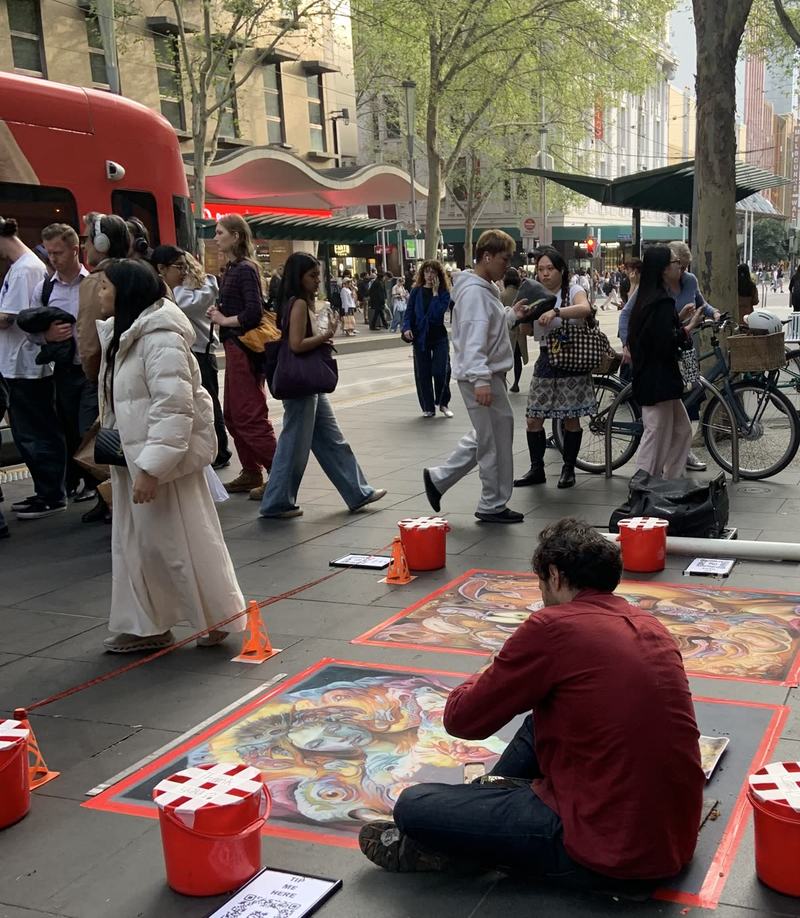
A pavement artist at work on a busy footpath in the city centre.
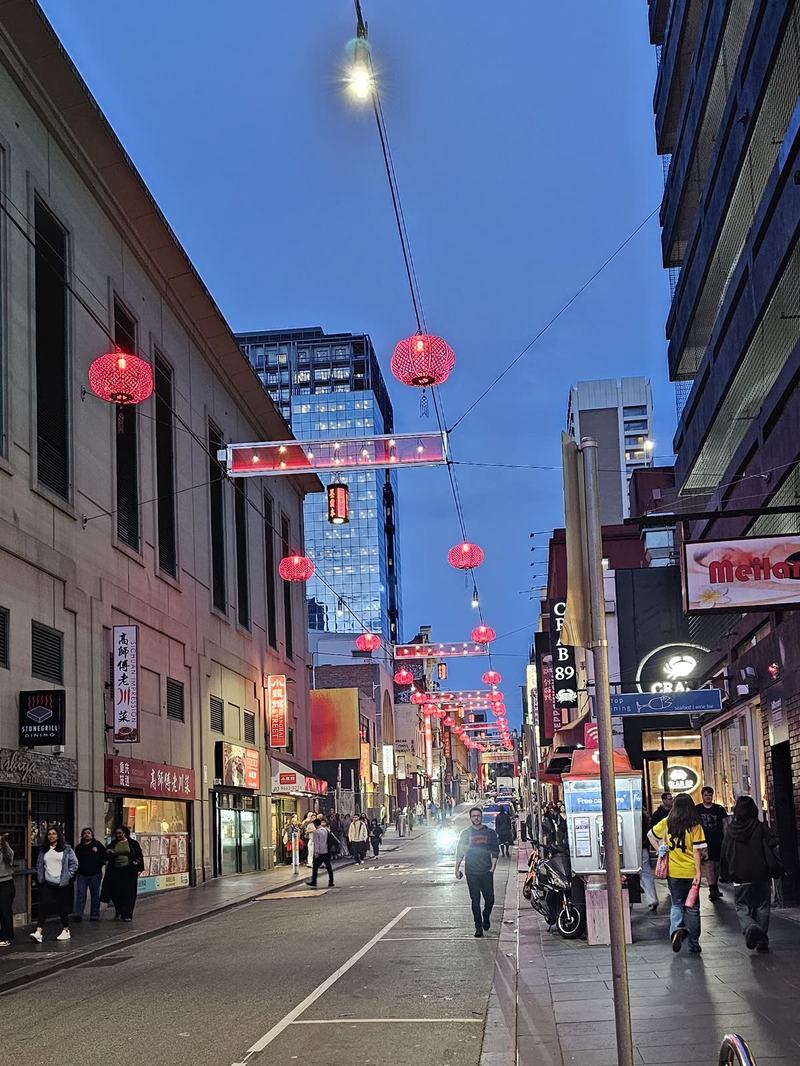
Little Bourke Street in Chinatown at dusk, 18:37. Chinatown dates from the 1850s gold rush, which is tomorrow's story.
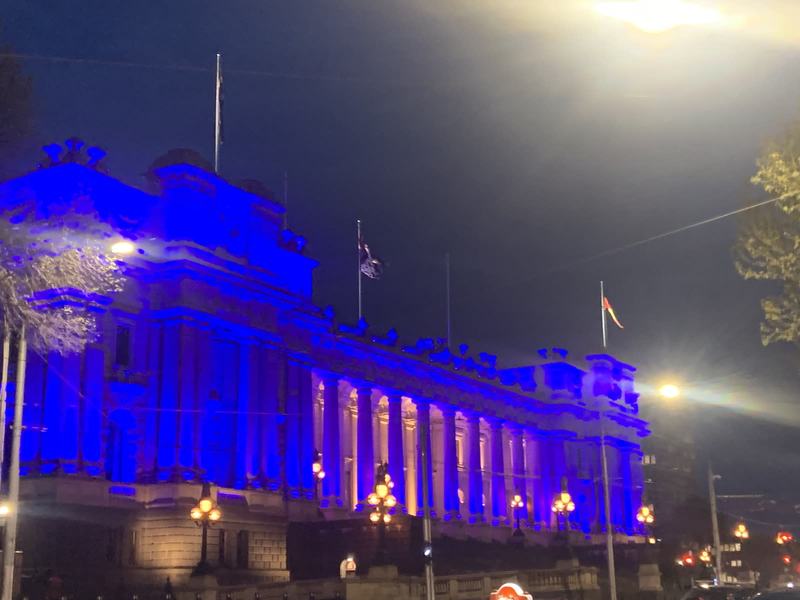
Parliament House, on Spring Street at the top of Bourke Street, lit blue after dark. Its colonnade was completed in 1889.
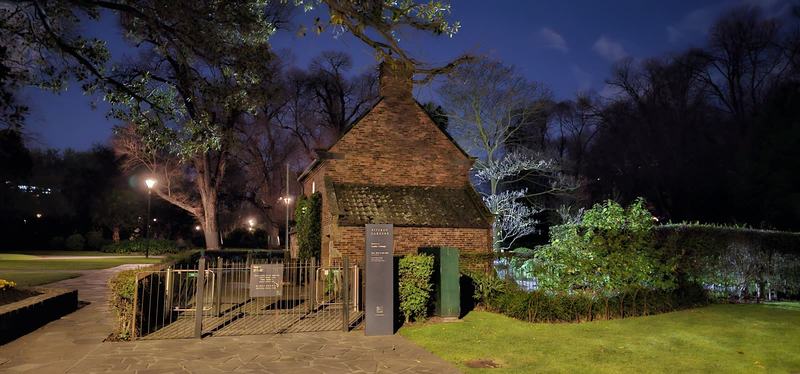
Cooks' Cottage in Fitzroy Gardens, 19:15, long after it shut. Captain Cook's parents built it in Yorkshire in 1755; it was shipped to Melbourne brick by brick and reopened here in October 1934. Another building that crossed the sea.
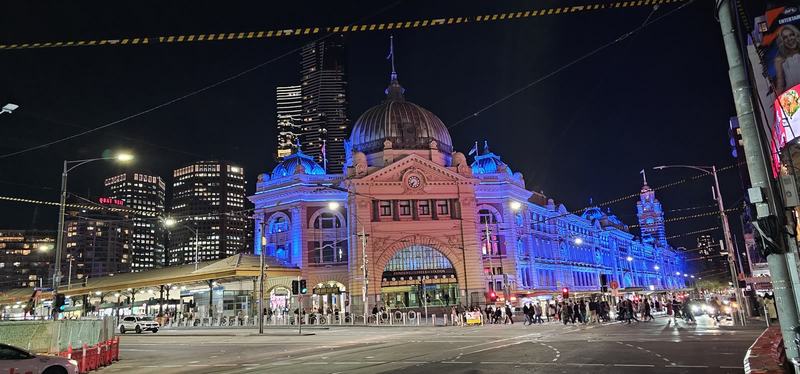
Flinders Street Station lit blue, 19:36, from across the corner of Flinders and Swanston Streets. The present building was essentially finished by mid-1909.
That corner is where the idea comes back. Governor Bourke named the town Melbourne in 1837, and its grid carries Hobart names. The Encyclopedia of Melbourne traces Swanston Street to Charles Swanston, the Hobart banker of the Port Phillip Association. Two streets north, Collins Street is named after David Collins, the man who gave up on Sorrento and founded Hobart. And in 1838, says the ADB, Batman owned a house on the north-west corner of Swanston and Flinders.
Dinner was at Shandong Mama, 7/200 Bourke Street, a street named after the governor who declared the treaty void. The restaurant says it brings a piece of Yantai, a coastal city in Shandong, to Melbourne.
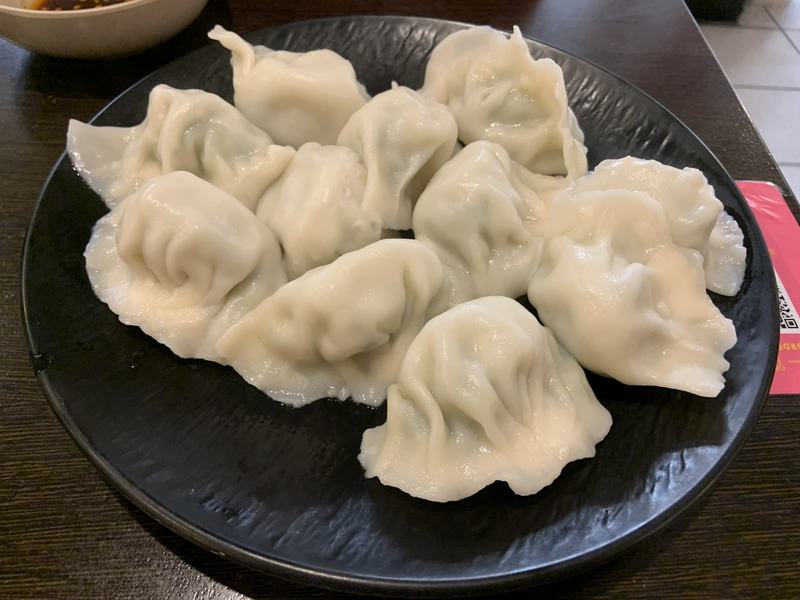
Boiled dumplings at Shandong Mama.
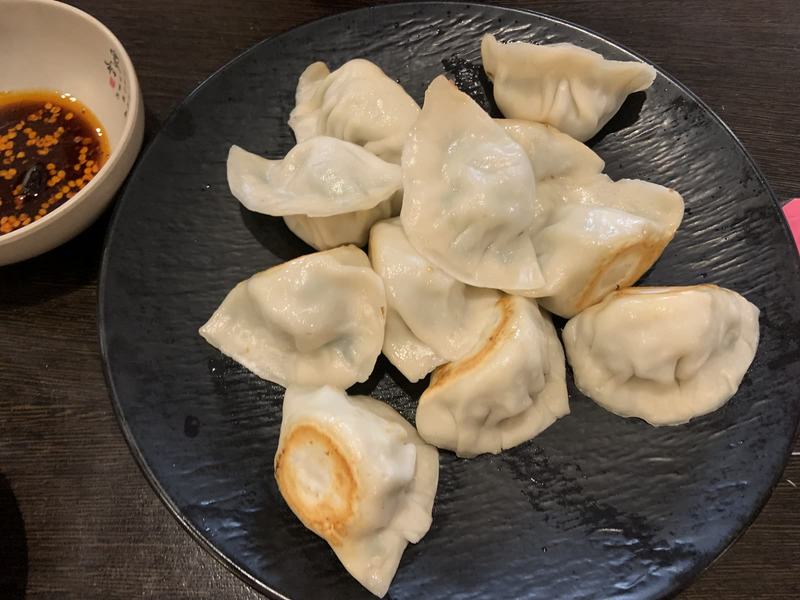
Pan-fried dumplings, with chilli oil.
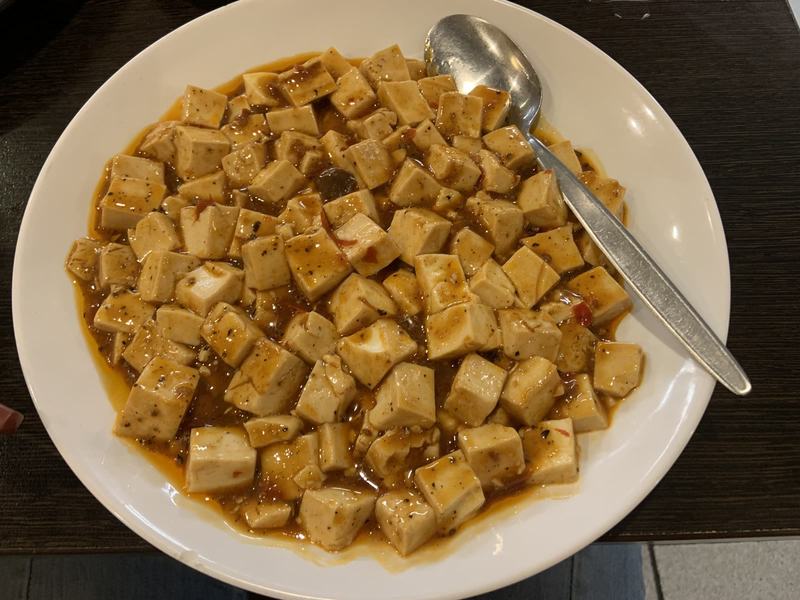
And mapo tofu.
The idea, again
Two cities, each started by people who had come across from the other side. Hobart began with the party that gave up on Port Phillip; colonial Melbourne began with Van Diemen's Land men, Hobart money and Tasmanian bricks, on land that was never sold. Fawkner first crossed Bass Strait as a boy, from Port Phillip to the Derwent, crossed back at 42, and died in Melbourne in 1869. For us the strait was 85 minutes on the timetable, an hour in the air and a window seat: the way home, mine to Victoria and Shirley's, the next night, on to Taiwan. For Fawkner it was the way back to Port Phillip, where he had first landed at ten.
Look for
- The Yarra from the plane, on the way in: the container docks, and the river the Enterprize was warped up in August 1835.
- Sullivans Cove before you leave Hobart: Constitution Dock is on the cove Collins chose in 1804, with the Mawson's Huts replica opposite.
- The street signs: Collins Street (Hobart's founder), Swanston Street (a Hobart banker) and Bourke Street (the governor who declared the treaty void).
- The north-west corner of Flinders and Swanston, across from the station: Batman's house in 1838.
- The Old Customs House on Flinders Street, now the Immigration Museum: the Enterprize tied up at the foot of that rise on 30 August 1835.
- Chinatown's lanterns on Little Bourke Street: the gold rush, and what the gold paid for.
The short version
- 09:40–09:54 — Lime e-ride, $1.65: probably out to the Bridge of Remembrance (09:47, halfway) and back. Check out of YHA Hobart Central by 10:00
- 10:18–10:34 — Mawson's Huts Replica Museum, $30 for two
- 10:56 — TMAG, free
- After TMAG — Postcards to Taiwan, probably on the way to the bus; SkyBus to the airport, $45.60 for two
- 14:15 — Qantas to Melbourne, timetabled 14:15 to 15:40. Actual: off the gate 14:37, took off 14:48, landed 15:50, at the gate 15:58
- Evening — Check in at Space Hotel, Russell St. Chinatown 18:37, Parliament House, Cooks' Cottage 19:15, Flinders Street Station 19:36
- Dinner — Shandong Mama, 7/200 Bourke St: dumplings and mapo tofu
Spent: SkyBus $45.60; Lime $1.65; Mawson's Huts $30; postcards $10.50; airport café $22.31.
More places nearby: Hobart anytime and Melbourne anytime.
Sources: Australian Dictionary of Biography (John Batman; John Pascoe Fawkner; David Collins); eMelbourne, the Encyclopedia of Melbourne, University of Melbourne (Foundation and Early History; Founding Myths; Batman's Treaties; Port Phillip Association; Collins Street; Street Names); State Library Victoria (Victoria's early colonial history timeline; "Settlement at Sullivan Bay"; The Batman deed, Melbourne; Ergo: Batman's treaty, quoting William Buckley); Wikipedia (Sullivans Cove; Collins settlement site; Constitution Dock; Immigration Museum, Melbourne); Shandong Mama (about and contact pages). Timetabled flight times from the Qantas booking; actual times from FlightAware's record of QantasLink 1294 on 29 September, the only Qantas flight scheduled 14:15 to 15:40; photo captions from the day note (Tensile Design & Construct, Soldiers Memorial Avenue and ArchitectureAu; Australian Antarctic Division; Tasmanian Times; Wikipedia).